

 Who We Are

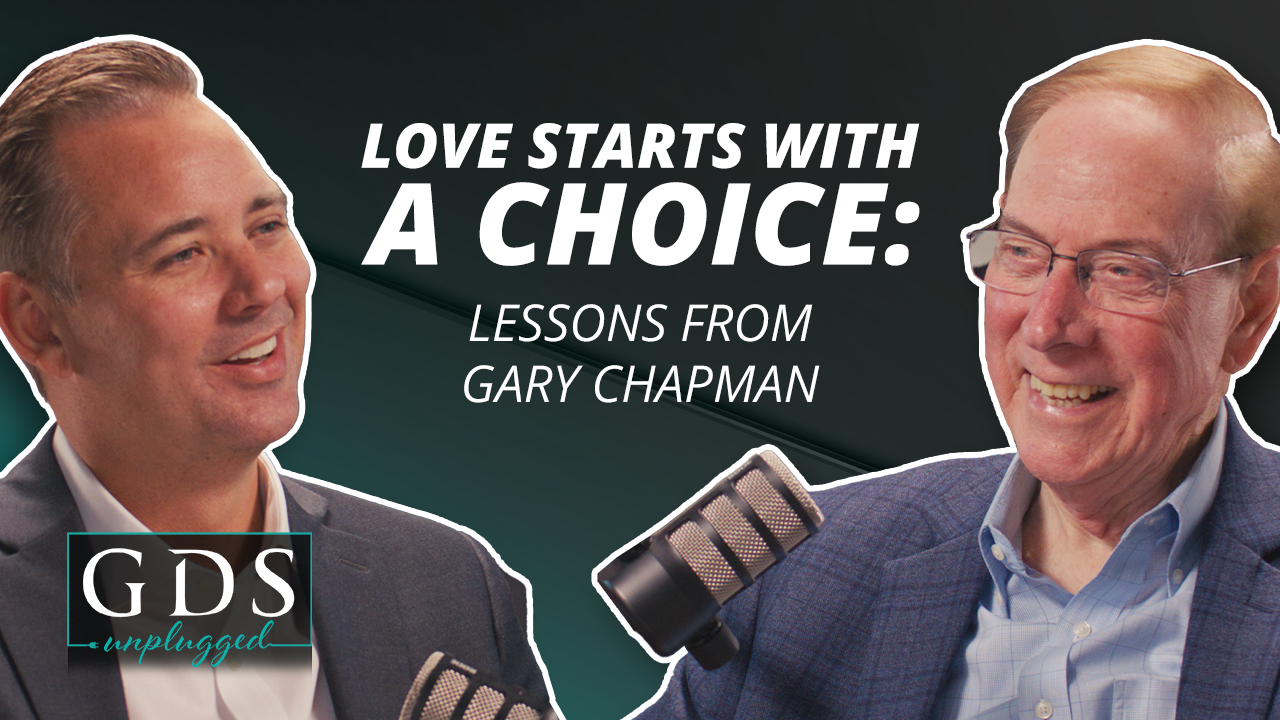
Love Starts with a Choice: Lessons from Gary Chapman [Ep. 15]

Listen on


View the full transcript of this episode here.
About This Episode
Dr. Gary Chapman, best‑selling author of The 5 Love Languages®, joins host Glen Smith to share practical ways couples, parents, and teams can feel more connected. From the 0–10 check‑in to learning a language that doesn’t come naturally, you’ll hear simple, repeatable habits you can start this week. We also explore how these ideas lower stress around money and decisions at home.
Why This Conversation Matters
Most relationship breakdowns aren’t dramatic, they’re drifts. Phones crowd out quality time. We do helpful things but not the ones that actually make our spouse feel loved. Money talks start with criticism instead of curiosity. Small frictions compound. A common language, and a few guardrails, keeps the emotional climate warm and the planning conversations calm.
The Big Ideas, Answered
1) “What are the Five Love Languages—really?”
Words of Affirmation · Acts of Service · Receiving Gifts · Quality Time · Physical Touch. The right one is the one that fills your person’s love tank, not the one that comes easiest to you.
2) “What if our languages don’t match?”
That’s normal. Love can start with one person. Observe what they praise, request, and complain about. Start speaking their language consistently. Results spark curiosity.
3) “How do we make this work with kids and busy schedules?”
You can spot a child’s language by age four. Teens often keep the same language but need a different dialect (e.g., private vs. public touch; grown‑up affirmation). Schedule short, undistracted time blocks, phones down, eyes up, to invest in those you care most about.
4) “Can people learn a language they never received?”
Yes. Skill beats instinct. Build simple scripts, practice aloud, and level up, like the dad who learned to hug his son one step at a time.
5) “How does this help our money conversations?”
When people feel loved, talks stay collaborative. Add simple ground rules: a personal‑spend limit before check‑ins; shared visibility into bills and goals; handle finances as an act of service, not a scoreboard.
6) “How do we keep connection on the front burner?”
Every few weeks, ask: “On a scale of 0–10, how much love did you feel coming from me this week?” If <10, ask: “What’s one thing I could do this week that would be most meaningful?” Do it.
7) “What repairs the inevitable misses?”
Apologies. None of us are perfect. Barriers don’t melt with time; they melt with sincere apology and chosen forgiveness.
Practical Moves You Can Use
- Run the 0–10 check‑in and act on the one thing they name.
- Speak their language daily—no announcements, no keeping score.
- Protect quality time: two phone‑free blocks this week (even 20 minutes).
- Money guardrails: agree on a check‑in threshold (spend up to $X freely; discuss above that), share the plan, and treat bill‑paying/investing as acts of service.
- If you blew it: apologize in a way that feels sincere to them.
The Most Common Fix We Make
It’s usually not a grand gesture; it’s a system: tiny, repeatable habits that keep love (and planning) current. Don’t ask, “Do we know each other’s language?” Ask, “When did we last use it, on purpose?”
Keep Learning & Stay Connected
- Take the Love Languages quiz together and compare results.
- Try the 0–10 check‑in for three cycles and note what changes.
- Subscribe to GDS Unplugged on your favorite platform.
- Send questions for the show: gds@gdswealth.com.
- Explore more conversations in our Learning Center and past episodes of the podcast.
This content is for informational and educational purposes only. They are not individualized investment, legal, or tax advice, and do not represent an offer to buy or sell any security. All investing involves risk, including possible loss of principal, and past performance is not a guarantee of future results. The views expressed are those of the hosts and may change without notice. Glen Smith and Robert Casey are investment adviser representatives of GDS Wealth Management, LLC, a registered investment adviser. Registration does not imply any specific level of skill or training. Visit https://www.gdswealth.com for information on our services, fees, and disclosures. References to mutual funds, ETFs, stocks, or other securities are for illustration only and should not be considered recommendations. ETF and mutual fund structures vary and may distribute capital gains; investors may still owe taxes. Tax-loss harvesting and wash-sale rules are complex—consult a qualified tax professional for guidance on your situation. Any case studies or client scenarios are hypothetical or for illustration only and do not guarantee future results; individual circumstances vary. Mentions of third-party speakers, companies, or products are not endorsements, and no compensation is received/paid unless expressly stated. Portfolio allocations or models discussed are examples only and may not be appropriate for all investors. References to asset class “historical performance” may reflect broad indexes, which are unmanaged and not directly investable. Discussion of multiple advisers highlights coordination and tax considerations; it is not a recommendation to hire or dismiss any adviser. This content may include references or links to third-party resources, and GDS Wealth Management is not responsible for the accuracy or completeness of third-party information.