
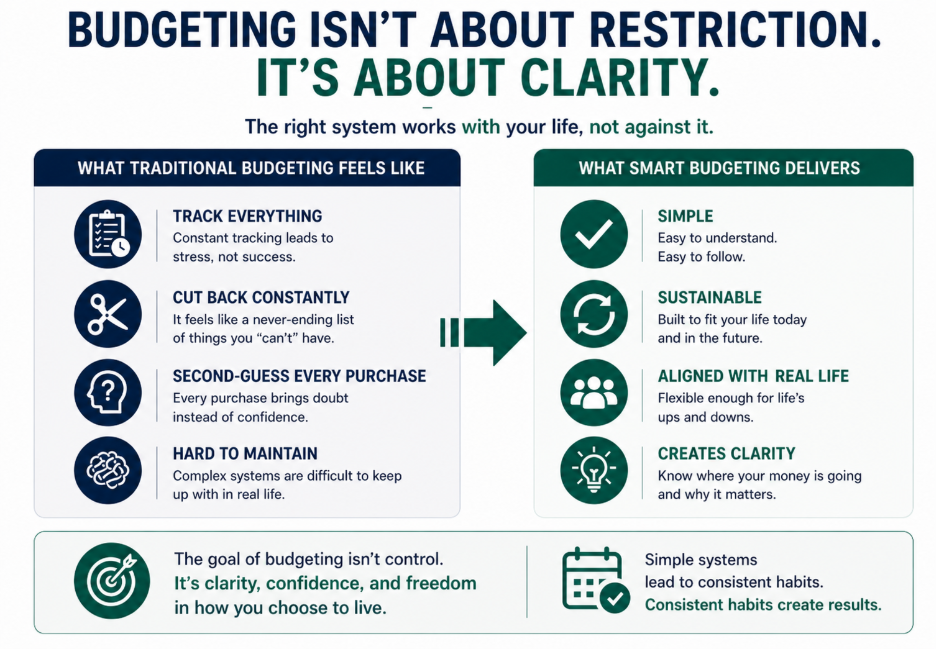
Let’s be honest for a moment: most budgeting advice feels like punishment dressed up as discipline. It asks you to track everything, cut back constantly, and second-guess every purchase you make. Over time, it stops feeling like a plan and starts feeling like a restriction.
And that’s exactly why most people abandon it. It’s not because they lack motivation or responsibility. It’s because the system they were given was never designed to work in real life, especially in today’s fast-paced world for families and professionals.
I recently recorded a Retirement Blueprint episode on this topic, where I discussed how financial systems need to align with behavior, not fight against it. In this article, I want to expand on that idea and walk through five practical budgeting strategies that actually hold up over time. Because the goal of budgeting is not control; it’s clarity.
Listen on


View the full transcript of this episode here.
Why Traditional Budgeting Fails So Often
The biggest misconception about budgeting is that success depends on discipline. It doesn’t. Most traditional systems rely on constant attention. They expect you to track every category, monitor every expense, and maintain perfect consistency. That might work for a few weeks, but over time, life gets busy, priorities shift, and the system breaks down. A better approach isn’t to become more disciplined; it’s to remove friction.
 *This illustration is hypothetical and for informational purposes only. It is intended to demonstrate general concepts and does not reflect actual client results. Individual outcomes will vary.
When budgeting becomes simple, it becomes more sustainable. And when it becomes sustainable, people often begin to see meaningful progress over time.
*This illustration is for informational and educational purposes only. Actual outcomes will vary based on individual circumstances.
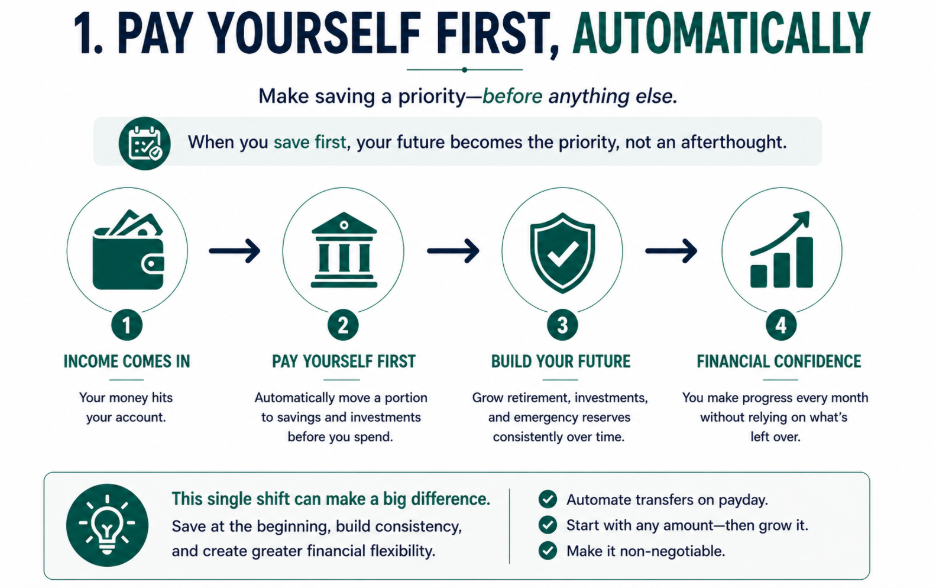
If there is one principle that consistently works across every income level, it is this: your savings should never depend on what is left over at the end of the month. Instead, it should happen at the beginning.
When income comes in, a portion should immediately move toward your future, whether that is retirement contributions, investment accounts, or building an emergency reserve. This shift changes the entire dynamic. Saving is no longer a decision you have to make each month. It becomes the default.
For many clients I work with in Dallas-Fort Worth and nationwide, this single adjustment can often lead to more consistent progress than relying solely on budgeting apps.
*This illustration is for informational and educational purposes only. Actual outcomes will vary based on individual circumstances.
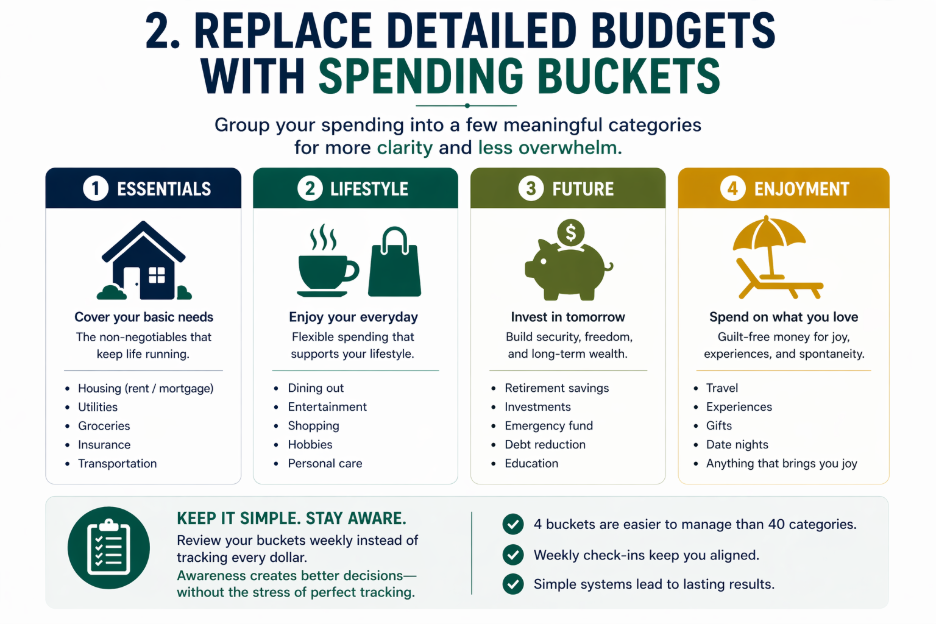
Highly detailed budgets look impressive, but they are difficult to maintain. When every dollar has to be categorized, tracked, and reviewed, the process becomes overwhelming.
A simpler alternative is to group spending into a few broad categories. Essentials cover housing, utilities, and basic needs. Lifestyle includes discretionary spending such as dining and hobbies. The future category focuses on saving, investing, and debt reduction. And a fourth category, often overlooked, is personal enjoyment.
By reviewing these categories weekly instead of tracking dozens of individual expenses, you maintain awareness without creating unnecessary complexity.
*This illustration is hypothetical and for informational purposes only. It is intended to demonstrate general concepts and does not reflect actual client results. Individual outcomes will vary.
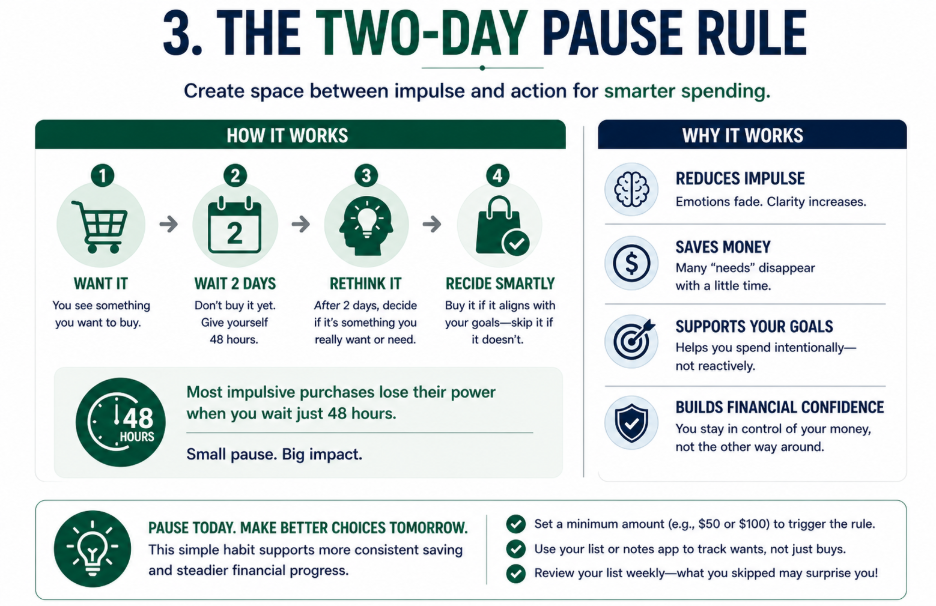
Impulse decisions are often more emotional than intentional. One of the simplest ways to improve spending habits is to introduce a short delay before making non-essential purchases above a certain threshold. This does not eliminate the option to buy; it simply creates space between the desire and the action.
What often happens is that the urgency fades. The purchase that felt necessary in the moment becomes less important over time. In many cases, that initial urgency fades, and the decision becomes much clearer without relying on willpower alone. This approach tends to be effective because it works with behavior rather than against it.
 *This illustration is for informational and educational purposes only. Actual outcomes will vary based on individual circumstances.
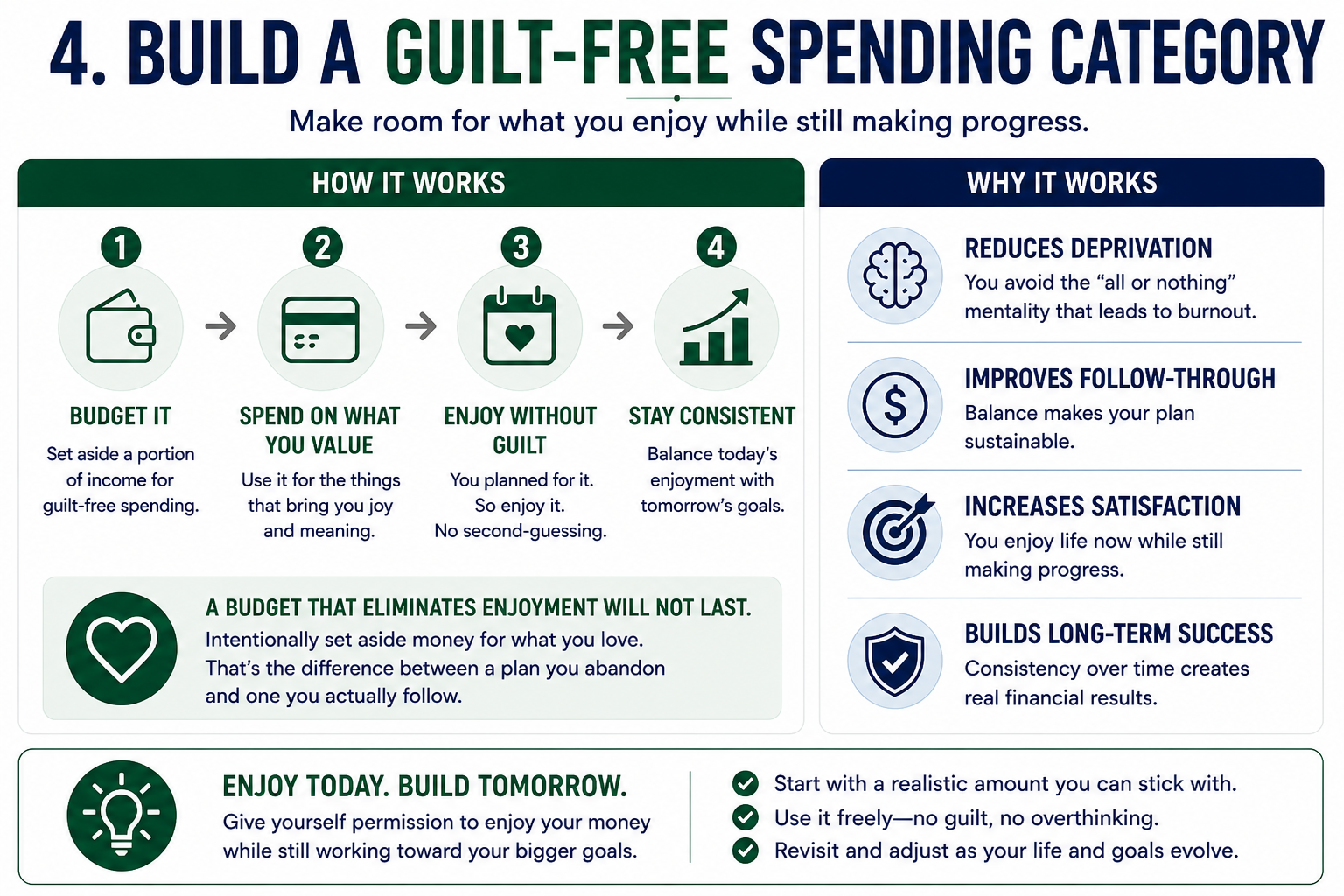
A budget that eliminates enjoyment will not last. People need the flexibility to spend on things they value, whether that is travel, hobbies, or spontaneous experiences. When every purchase feels like a compromise, the system eventually collapses.
A better approach is to intentionally set aside a portion of income for discretionary use. This creates balance. It allows you to enjoy your money while still making progress toward long-term goals. For many individuals, this is the difference between a plan they abandon and one they actually follow.
*This illustration is for informational and educational purposes only. Actual outcomes will vary based on individual circumstances.
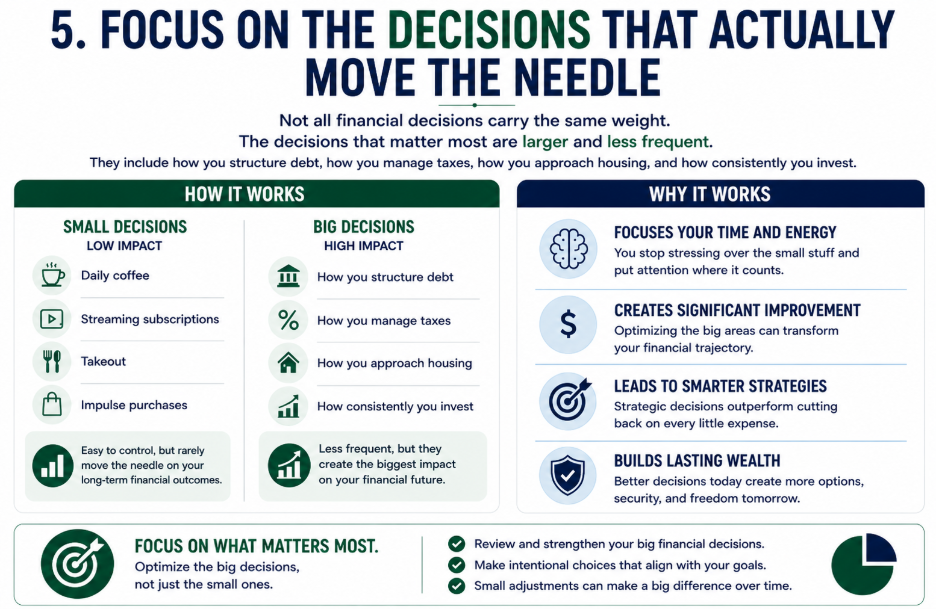
There is a tendency to focus on small, visible expenses because they are easy to control. However, these rarely have a meaningful impact on long-term financial outcomes. The decisions that matter most are larger and less frequent. They include how you structure debt, how you manage taxes, how you approach housing, and how consistently you invest.
Optimizing these areas can have a significant impact without requiring constant sacrifice. In contrast, focusing only on minor expenses often leads to frustration without meaningful progress.
When Simplicity Changes Everything
I’ve worked with individuals and couples who have tried multiple budgeting systems without success. They tracked expenses, used multiple apps, and constantly adjusted categories. Despite their effort, they felt stuck.
Their issue was not a lack of discipline. It was a lack of alignment. When I simplified their approach, automating savings, consolidating spending, and removing unnecessary friction, they began to see progress relatively quickly. In some cases, individuals were able to build meaningful savings within a relatively short period of time without feeling restricted. More importantly, many reported feeling a greater sense of control. That is what a good system should do.
The Bigger Takeaway
Budgeting is often misunderstood. It is not about limiting your life. It is about directing your resources toward what matters most. When your spending aligns with your priorities, the process becomes less about restriction and more about intention. The goal is not perfection; it is consistency.
If you would like guidance building a financial strategy that aligns your spending, saving, and long-term goals into a clear, sustainable plan, the team at GDS Wealth Management can help. We’ll evaluate where you stand and identify opportunities to strengthen your financial position with greater clarity and confidence.
Find more information on LinkedIn and YouTube.
GDS Wealth Management is a registered investment adviser. The author is an Investment Adviser Representative of GDS Wealth Management. Registration does not imply a certain level of skill or training. This content is for informational purposes only and is not personalized investment, tax, or legal advice. Any strategies discussed may not be suitable for all individuals and are not guaranteed to produce results. All investments involve risk, including the possible loss of principal. Past performance does not guarantee future results. Examples discussed are hypothetical and for illustrative purposes only and do not represent the experience of any specific client. GDS Wealth Management does not provide tax or legal advice. Please consult your tax and legal professionals regarding your specific situation. Advisory services are provided pursuant to a written agreement. For additional information about GDS Wealth Management, including its services and fees, please review our Form ADV available at adviserinfo.sec.gov.
