

There’s an uncomfortable truth that doesn’t get talked about nearly enough: retirement planning may not have fully kept pace with today’s realities. Not because people aren’t saving. Not because markets don’t work. But because the strategies being used were built for a completely different world.
Today’s environment includes longer lifespans, higher healthcare costs, more volatile markets, and more complex tax systems. And yet, many retirement plans still rely on outdated assumptions that no longer hold up.
I recently recorded a Retirement Blueprint episode on this topic, exploring how modern retirement planning needs to evolve beyond outdated rules and one-size-fits-all strategies. In this article, I want to expand on those ideas and walk through what’s actually broken, and more importantly, how to fix it.
Listen on


View the full transcript of this episode here.
Is Saving Enough for Retirement, or Is Strategy the Real Problem?
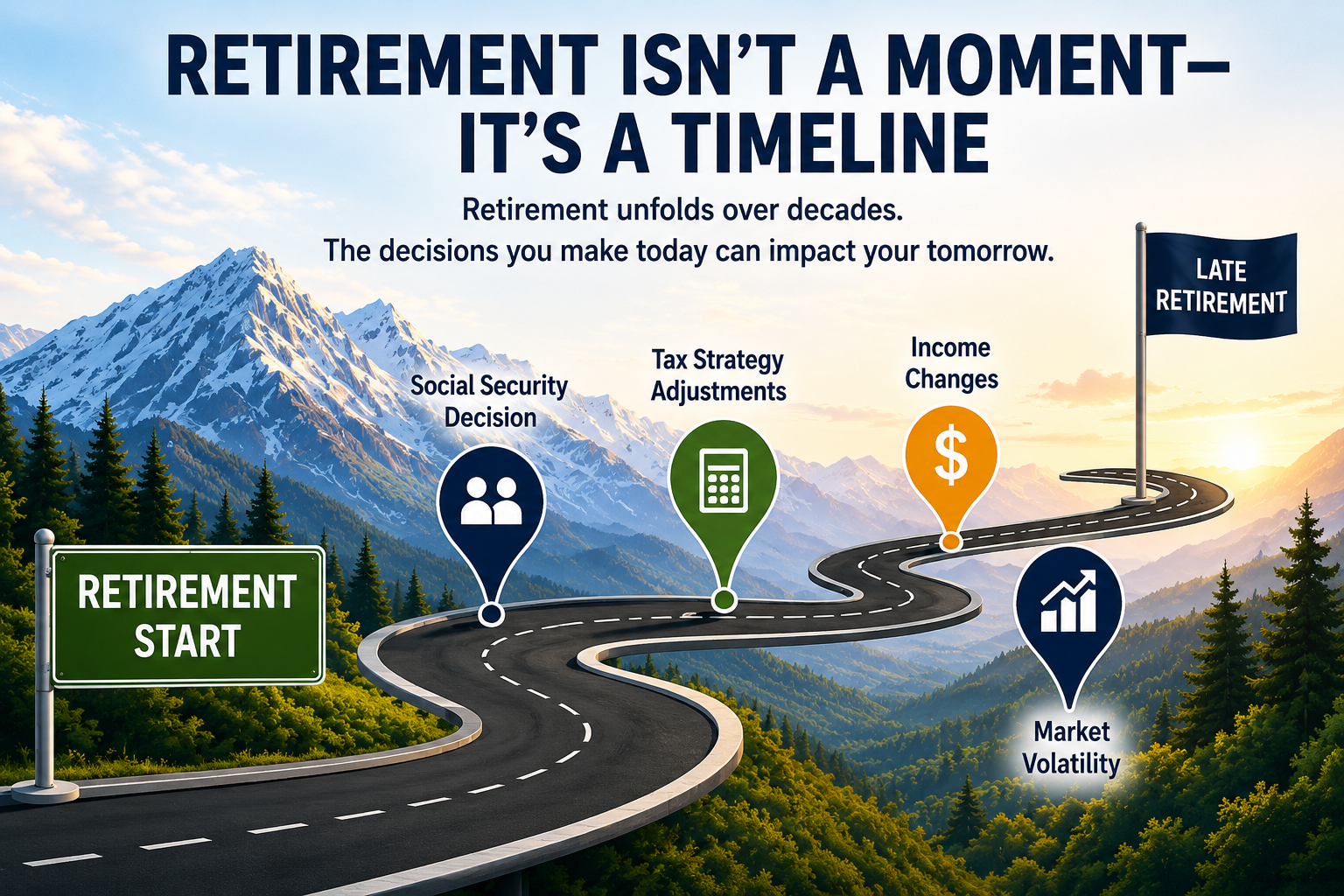
*Illustrative Example – Conceptual. For informational purposes only and not intended as personalized advice. Depicts a general retirement timeline; actual experience and outcomes will vary.
Most people believe retirement success comes down to one question: Did I save enough? While saving is important, it’s rarely the point where plans fail. More often, the breakdown happens in how those savings are structured, accessed, and coordinated over time.
Traditional planning tends to treat retirement like a one-time event, something you prepare for and then execute. In reality, retirement unfolds over decades. Decisions made early, such as when to claim Social Security, how to withdraw income, and how to manage taxes, can create long-term ripple effects that shape financial outcomes for 20 or even 30 years.
Why Do Traditional Retirement Strategies Fall Short Today?
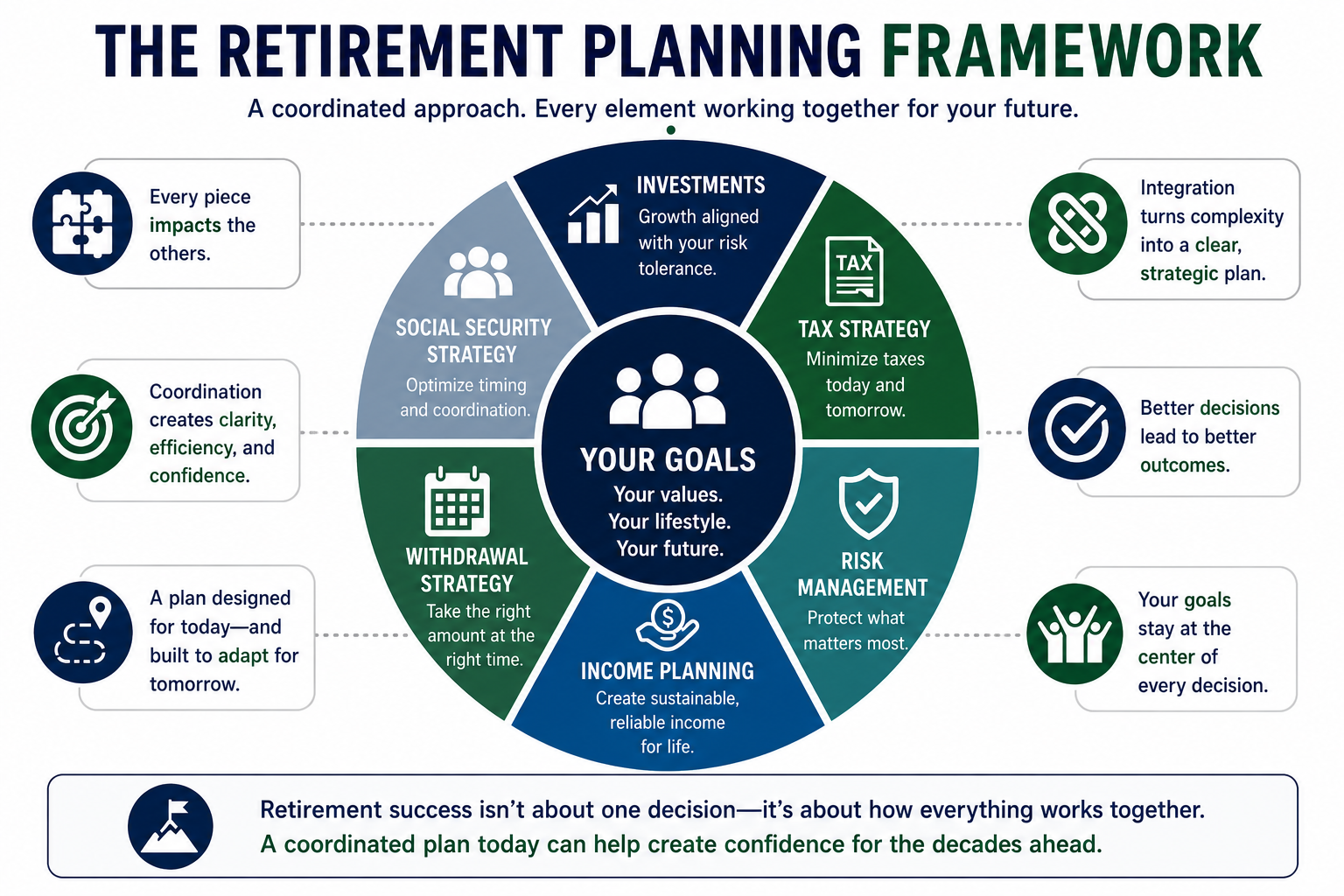
*Illustrative Example – Hypothetical. For informational purposes only. Not representative of any specific client. Results will vary.
Many retirement plans still rely on fixed withdrawal assumptions that were built during periods of higher interest rates and different market conditions. Applying those same rules today without adjustment can expose retirees to unnecessary risk, particularly in volatile or low-yield environments.
Do Taxes Impact Retirement More Than Most People Realize?
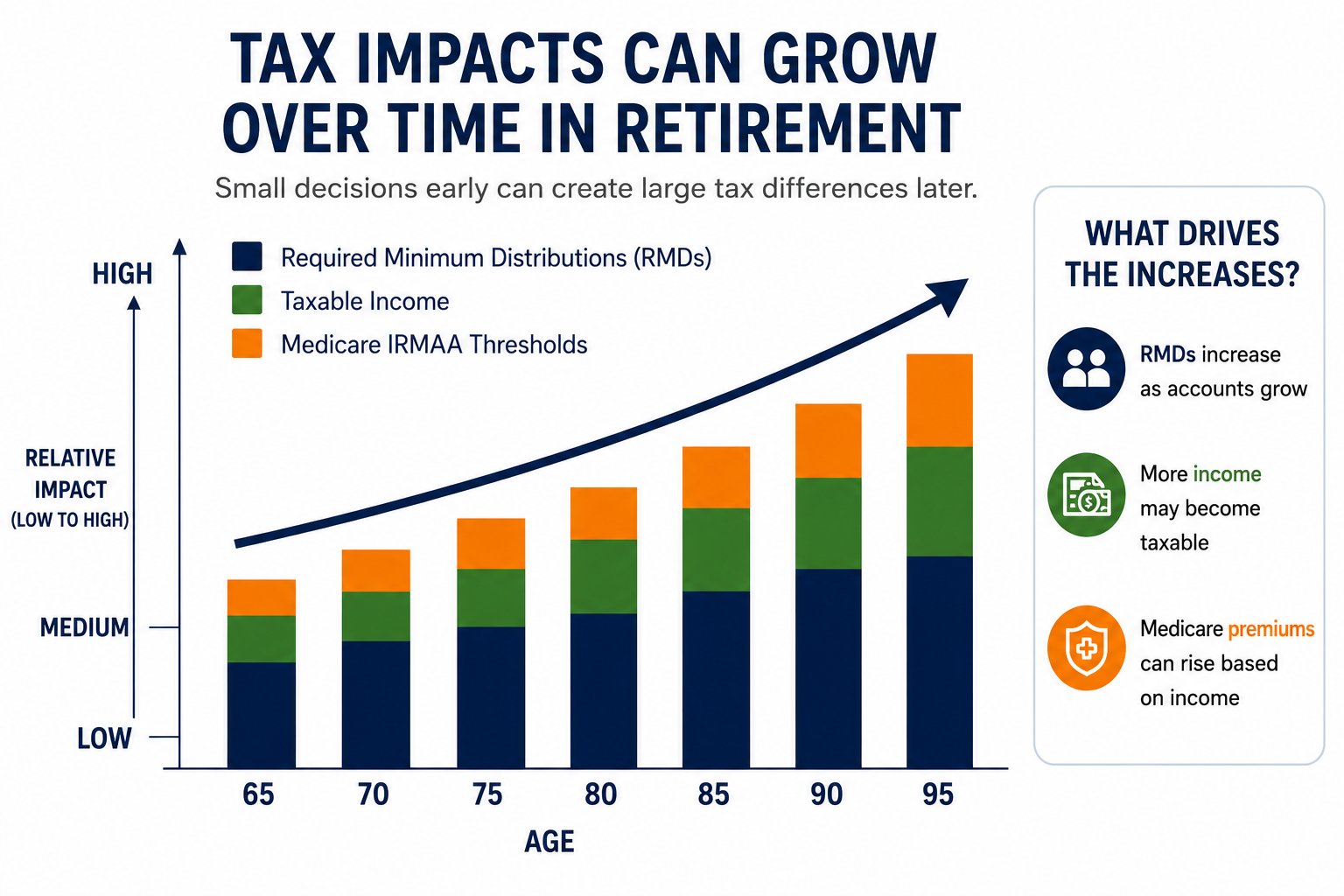
*Illustrative Example – Hypothetical. Based on current IRS rules for Required Minimum Distributions and assumed income levels. Source: IRS. Future tax laws and individual results will vary. Not indicative of future outcomes.
Taxes remain one of the most overlooked variables in retirement planning, yet they often have one of the greatest long-term impacts. It’s not just about what you pay today; it’s how your tax situation evolves over time.
Required Minimum Distributions can push income higher than expected, Social Security benefits may become taxable, and Medicare premiums can increase based on income thresholds. At the same time, opportunities like Roth conversions are frequently missed due to lack of proactive planning.
A retirement strategy that doesn’t fully account for taxes isn’t just incomplete; it can be less effective over time.
Is Social Security Timing More Complex Than Just “When to Claim”?
For many retirees, Social Security is treated as a simple timing decision. But the reality is far more nuanced. The true value of Social Security lies in how it integrates with the rest of a retirement plan.
When coordinated effectively, Social Security can help stabilize income, reduce withdrawal pressure on portfolios, and improve long-term sustainability. When treated in isolation, however, it often leads to missed opportunities.
Why Investment Returns Alone Don’t Determine Retirement Success
There’s often an overemphasis on portfolio performance, but retirement success isn’t defined by how much your investments grow; it’s defined by how reliably your income lasts. Strong returns can help, but without coordination between income sources, taxes, and withdrawals, performance alone won’t solve the problem.
Does One-Size-Fits-All Retirement Planning Actually Work?
The idea of the “average retiree” is misleading. Every household has unique spending habits, income sources, tax exposure, and long-term goals. Yet many retirement plans are still built using generalized assumptions rather than personalized strategies, creating gaps that only become visible over time.
What Happens When Retirement Planning Isn’t Coordinated?
It’s common to see retirees with strong savings and detailed plans still feel uncertain. On paper, everything looks solid. But underneath, there are often missing pieces, no tax strategy, no coordinated withdrawal plan, no Social Security optimization, and no integration between income sources.
This lack of alignment creates unnecessary stress, even when the assets are there. When those same elements are brought together into a cohesive strategy, the outcome can change significantly, not because of higher returns, but because of better coordination.
What Does Integrated Retirement Planning Actually Look Like?
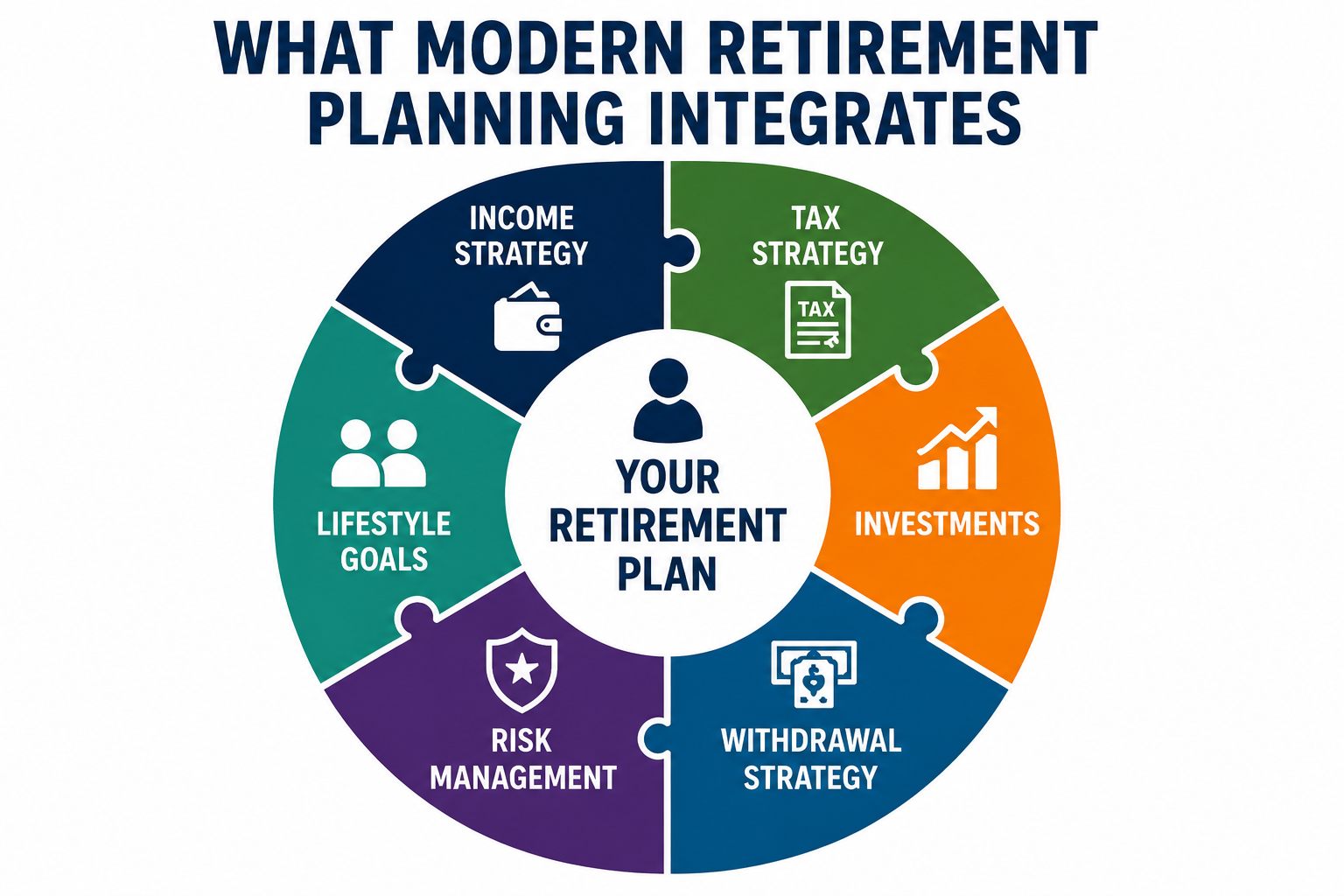
*Illustrative Example – Conceptual. For informational purposes only. Depicts components of a retirement planning framework and is not a guarantee of results. Individual outcomes will vary.
The future of retirement planning isn’t about replacing one rule with another. It’s about integration, ensuring that every part of your financial life works together rather than in isolation.
A well-designed plan connects income sources, tax strategy, investment allocation, withdrawal sequencing, risk management, and lifestyle goals into one cohesive framework. These elements constantly influence one another, and aligning them creates a more resilient and adaptable plan.
What Should a Modern Retirement Plan Include Today?
A modern retirement plan should be designed with flexibility and coordination at its core. It needs to adapt to changing market conditions, incorporate tax-efficient withdrawal strategies, and optimize Social Security decisions in the context of the full plan.
Equally important, it should provide multiple income streams and remain flexible enough to adjust as life evolves. Above all, a strong plan should deliver clarity, because clarity is what ultimately drives confidence in retirement.
Is a Perfect Retirement Plan Even Realistic?
Many plans are built around precision, projected returns, exact withdrawal rates, and ideal scenarios. But real life doesn’t follow perfect projections. Markets fluctuate, expenses shift, and priorities evolve.
A strong retirement plan isn’t one that works perfectly under ideal conditions. It’s one that continues to work even when conditions change. The goal isn’t perfection; it’s confidence.
So, Is Retirement Planning Broken, or Just Outdated?
In many cases, retirement planning may be outdated, not because the concept fails, but because the execution hasn’t evolved with today’s realities. The encouraging part is that it can be improved with a modern approach through better coordination, more thoughtful integration, and a strategic plan for how income, taxes, and investments interact.
At its core, retirement planning isn’t about spreadsheets. It’s about confidence that your income is sustainable, your taxes are managed, and your plan can adapt over time.
If you would like guidance building a modern retirement plan that integrates your income, tax strategy, Social Security decisions, and investment approach into one coordinated system, the team at GDS Wealth Management can help you evaluate your current plan and identify opportunities to create greater clarity, flexibility, and long-term confidence.
GDS Wealth Management is a registered investment adviser. The author is an Investment Adviser Representative of GDS Wealth Management. This communication is a general advertisement for informational purposes only and is not personalized investment, tax, or legal advice or a recommendation to take any action. All investments involve risk, including possible loss of principal. No guarantee of results. Examples are hypothetical and not representative of any specific client. Advisory services are provided pursuant to a written agreement. For more information, including services and fees, please review our Form ADV at adviserinfo.sec.gov.
